
(Part 3 of the PERMA Series)
Recently we explored how positive emotion fuels sales growth, and why your team’s emotional state is often the hidden driver (or drag) behind every missed opportunity. Confidence, gratitude, and optimism aren’t just nice-to-haves… they’re revenue catalysts.
But emotion is just the first layer.
Even when your people feel good about their value, you still have to answer the next critical question:
Are they engaged in the work that matters most?
Here’s the uncomfortable truth: most companies – even well-run, successful ones – have invisible disengagement lurking inside their customer-facing roles.
I’m not talking about laziness or defiance. I’m talking about subtle signs of disengaged employees that go unnoticed because they sound normal:
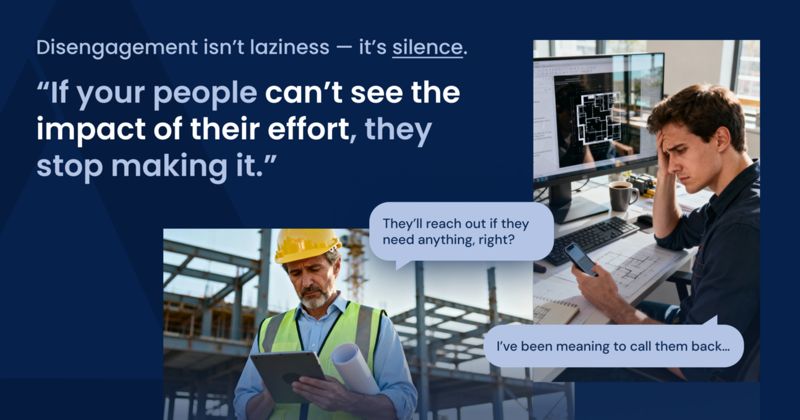
- “I’ve been meaning to call them back…”
- “We’ve just been so busy with deliverables.”
- “They’ll reach out if they need anything, right?”
Translation? Emotional disconnection from business development.
And if you’re leading a company with 10, 50, or 150 customer-facing people, here’s the cost of those disengaged employees:
- Hundreds of untouched customer conversations that could lead to expansion, referral, or retention.
- Team members who spend 95% of their day “doing the work” and 0% growing the relationship.
- Internal drift…where sales is selling, ops is producing, and service is putting out fires… but no one is rowing together.
That’s not a people problem. That’s a structure problem.
Because engagement doesn’t come from hiring “motivated people” or giving occasional pep talks. It comes from clear rhythms, quick wins, and consistent visibility into what matters.
Disengaged teams don’t swing. They sit. They wait. They coast.
Not because they’re bad, but because there’s no feedback loop.
When they don’t see the impact of their actions, these employees disengage from the action itself.
It’s just human.
You can hear it in their tone. You can see it in their CRM notes. You can feel it in the way meetings feel flat, or updates feel obligatory.
And the scary part?
This happens slowly…silently…and almost always before sales start slipping.
Which is why fixing it isn’t just a cultural imperative. It’s a strategic one.
Because when your customer-facing team is engaged – when they’re emotionally connected to the work and see exactly how it moves the needle – that’s when growth becomes sustainable.
In the next section, I’ll show you what real engagement actually looks like, and why it’s radically simpler to create than you might think.
It doesn’t require more hours. Just a better system.
How Daily Engagement Drives Predictable Sales Growth (Without Burning Out Your Team)
Here’s a radical idea most companies miss:
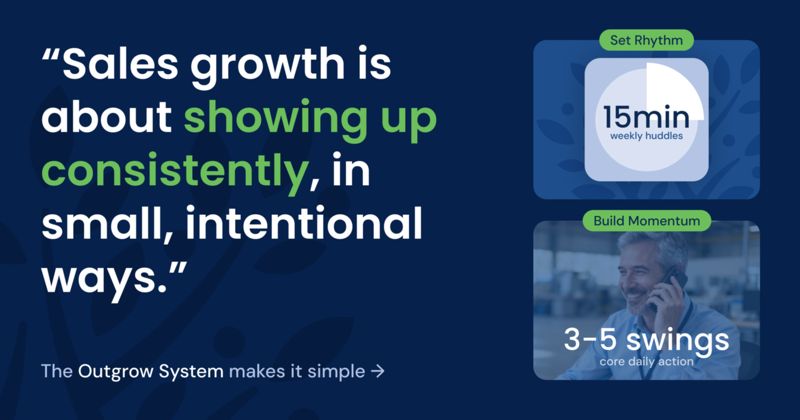
Sales engagement isn’t about trying harder. It’s about showing up consistently, in small, intentional ways.
And the most engaged customer-facing teams aren’t the ones doing cartwheels or logging heroic hours. They’re the ones doing simple things often. Things that are tied directly to customer connection and business growth.
Let’s get specific.
Imagine a team where:
- Salespeople don’t ghost warm leads, because they’re in a rhythm of checking in.
- Service reps don’t just solve issues, they ask, “What else do you have coming up that we can help you with?”
- Ops staff don’t just install the product or provide the service, they consistently educate customers on additional products and services, because they know the value they provide and the impact it makes.
That’s what employee engagement looks like in a revenue culture. It’s not about charisma. It’s about clarity and cadence.
And that’s why most businesses, even well-intentioned ones, miss it.
They confuse engagement with enthusiasm. But your people don’t need to “get pumped up.” They need a process that:
- Anchors their effort to something meaningful.
- Makes that effort visible.
- Reinforces the behavior every single week.
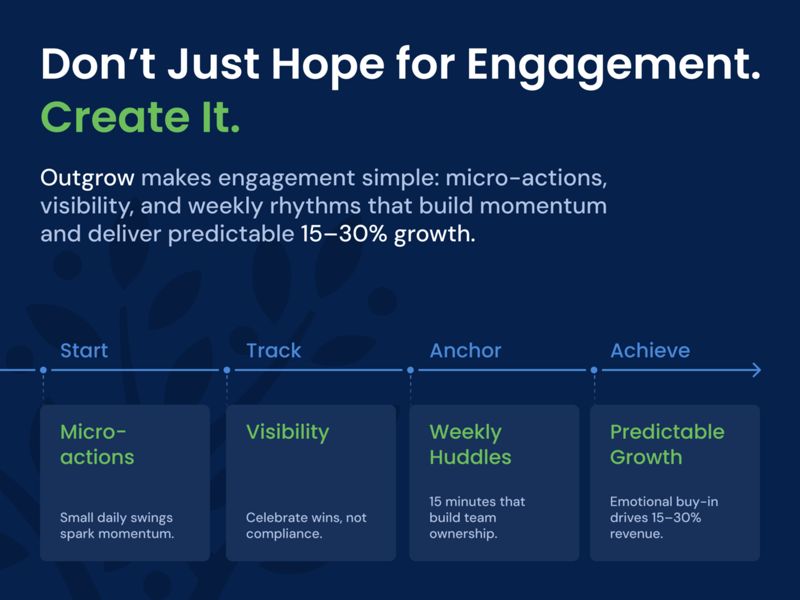
In the Outgrow system, engagement is built on a few simple but transformative elements:
1. Clear Daily Actions (We Call Them “Swings”)
People engage when they know exactly what to do. Not vague goals. Not fuzzy intentions. Concrete actions.
That’s why Outgrow starts with the swing — a defined, proactive communication with a customer, prospect, or internal partner.
Examples include:
- A “DYK” (Did You Know) call to highlight a service the customer may not be using.
- A Quote Follow-Up to a customer that was sent last week.
- A Pivot to the sale or the next conversation: “When would you like to get started?” Or, “How does next Tuesday work to finalize the deal?”
Each swing is small, simple and fast – taking seconds, not minutes. And when done daily, it compounds into consistent, measurable engagement.
2. Real-Time Visibility
Your team is more likely to stay engaged when they know their efforts are seen. That’s why Outgrow includes weekly action tracking – not as surveillance, but as celebration.
You’re not tracking for compliance. You’re tracking to amplify the right behaviors:
- “Melissa made 6 swings and uncovered 3 reorders.”
- “Carlos followed up on a 60-day dormant account and got a new order.”
- “John’s rDYK question (the Reverse Did You Know) identified two upcoming jobs with expansion potential.”
This visibility helps everyone stay connected to the mission and creates peer-driven momentum.
3. Shared Accountability & Team Ownership
When engagement is individual, it fizzles. When it’s shared, it sticks.
That’s why Outgrow bakes in team huddles (15-20 minutes max) where people quickly share:
- Their swings
- Their wins
- Their plan of action for the upcoming week.
This isn’t performance theater. It’s emotional reinforcement. Your people feel seen, supported, and most importantly…responsible to each other.
That’s the real unlock.
When your service rep thinks, “I should follow up because I’d love to share this win on Monday,” you’ve gone from disengagement to self-directed accountability.
So what happens next?
Outreach increases. Win rates improve. Confidence builds.
And all of it comes from 3–5 actions a day…not a motivational speech or another CRM integration.
This is what it looks like when engagement is operationalized, not as a goal, but as a system.
The 3-Step Engagement Loop That Turns Ordinary Teams Into Sales Engines
Let’s talk mechanics.
You know your team has the potential. You’ve seen flashes of brilliance. But it’s sporadic, like lightning in a bottle.
What if it didn’t have to be?
What if you could build a loop – a reliable system – that makes engagement automatic, without requiring heroic effort or constant external pressure?
That’s exactly what Outgrow does. It takes the concept of “sales engagement” and turns it into a daily rhythm your team can run in seconds per day and minutes per week. Here’s how.
Step 1: Start with Micro-Actions that Build Engagement Momentum
We’ve said it before, and we’ll keep saying it: engagement follows clarity.
That’s why Outgrow starts with the simplest unit of sales action: the swing.
These aren’t complicated outreach efforts or cold-call marathons. They’re small, human, and low-pressure:
- “Hey, just thinking about you. How’s your family? What are you working on that we can help you with?”
- “Did you know we also offer X Product or Y Service?”
- “Who else do you know that we can help the way we help you?”
These tiny touches, repeated daily, create emotional momentum. Your team associates taking action with feeling good. That’s a loop worth reinforcing.
And because it’s just 3–5 swings a day, even your busiest people – service reps, ops managers, seller-doers – can participate without feeling burdened.
Step 2: Use Light Tracking to Reinforce Engagement (Not Micromanage It)
One of the most misunderstood drivers of disengagement? Ambiguity.
When people don’t know what’s expected or whether their effort is even noticed, they disengage. That’s why Outgrow includes a simple, lightweight tracking tool to:
- Count swings (not calls, not minutes, but swings).
- Highlight conversations started, quotes followed up, referrals asked for.
- Celebrate the actions that lead to outcomes, and reinforce proactivity as the leading indicator of growth
It’s not about creating pressure. It’s about creating visibility, so your people see that their actions are leading to outcomes.
When a team member can say, “I used 5 DYKs last week and one turned into a new sale,” they’ve just connected behavior to result. That’s where engagement lives.
Step 3: Anchor It All With a 15-Minute Weekly Huddle
Here’s where everything comes together: the Outgrow Weekly Huddle.
This isn’t a status meeting. It’s an engagement accelerator. Your team shares:
- Wins from last week’s swings.
- Outgrow techniques that are creating success for them (which DYKs, which rDYKs, etc).
- Customers they are focused on proactively calling this next week, and which actions they will focus on.
This creates shared ownership of sales momentum. Suddenly, service and ops aren’t “supporting” business development, they are business development. Everyone’s in the loop. Everyone’s helping. Everyone’s engaged.
No spreadsheets. No complicated tools. Just structured conversation, visible action, and a clear sense of purpose.
Bonus: Use Leader Language to Close the Engagement Loop
Want to supercharge this system?
Reinforce it with intentional recognition. When leaders say things like:
- “Stay focused on intentional Pivots, they’re making a huge difference.”
- “Thanks for sharing. That’s a great follow-up.”
- “Your swing led to a $40K reorder. Awesome job.”
You create emotional velocity. Your people feel seen, valued, and eager to keep going.
Engagement is not an event. It’s the byproduct of a system that makes progress visible and participation meaningful.
This isn’t complicated. It’s just rare.
The result? A team that’s emotionally invested, operationally activated, and fully aligned on your growth mission.
And that’s how engagement becomes your competitive advantage…not by accident, but by design.
Don’t Just Hope for Employee Engagement. Engineer It. Here’s How to Start.
By now, you’ve probably got a gut sense of whether your team is truly engaged; not just “working,” but invested in helping your business grow.
And if you’re honest, you also know this: hope is not a system.
You can’t hope that your people will take initiative.
You can’t hope that service will surface opportunities.
You can’t hope that sales will follow up without fail.
You can’t hope that culture will magically cohere around revenue.
Hope is nice. But rhythm is better.
And that’s what the Outgrow system gives you: a simple, scalable rhythm that makes engagement inevitable. Not through micromanagement. Not through pressure. But through clarity, structure, and small daily actions that feel good to do.
Most teams spend their days in execution mode; solving problems, fulfilling orders, answering emails, fixing issues. Important work. But if that’s all they’re doing, the business becomes a treadmill. You’re moving fast…but not necessarily forward.
Engagement flips that.
Engaged employees aren’t just doing. They’re initiating.
They’re not just reactive. They’re proactive.
They’re not just busy. They’re focused on specific actions that move the needle.
And as the Owner or CEO, you don’t need to choose between culture and cash flow. With the right system, you get both.
You get a team that:
- Knows what to do each day to contribute to growth.
- Feels emotionally supported in doing it.
- Shares their wins and multiplies their effort through teamwork.
You get 15–30% predictable revenue growth without hiring, rebuilding, or changing your whole org structure. Just by activating what’s already inside your people.
That’s the power of engineered engagement.
You don’t need to do more. You need to help your people do what already works – more often, more easily, and with more emotional buy-in.
So…are you ready to flip the switch?
Message me now to schedule a short, focused strategy call. I’ll walk you through how Outgrow drives team-wide engagement, and how quickly it turns that engagement into revenue.
We’ll look at your current selling process, your customer-facing roles, and how to layer in the Outgrow system without breaking your business.
Because let’s be clear: this isn’t sales training, it’s sales doing.
It’s a cultural upgrade.
And it starts with one decision: Let’s grow. Together.
This article is the third article in our PERMA series, where we explore how Positive Psychology principles fuel the Outgrow system to transform sales cultures and drive predictable growth. Explore the full series:
- Why Most Business Development Efforts Are Broken
- Why Low Morale Is Quietly Killing Your Sales — And What to Do About It
- Why Disengaged Employees Sabotage Sales, Even if They Don’t Mean To
- The Real Reason You’re Missing Sales? You Stopped Talking to the Right People
- When Meaning Disappears, Sales Becomes Optional (And That’s a Big Problem)
- Why Your Team Isn’t Winning More (Even When They’re Working Hard)
(More articles coming soon.)