
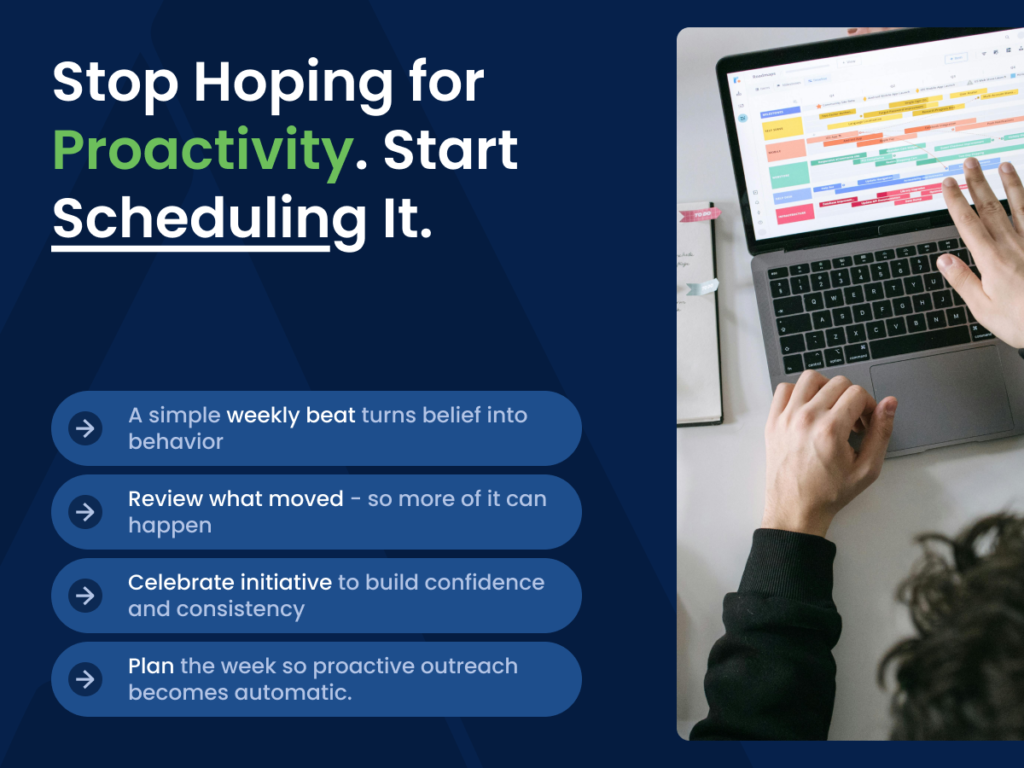
This article is part two of our CEO Series where we explore how managers turn proactive belief into a simple weekly rhythm that drives consistent, measurable growth.
When Belief Stops Showing Up In The Calendar
Belief got you here.
You believe in your product, your market, and your people. Your teams believe in serving customers well. No one doubts the mission.
But this positive belief is not usually what decides priorities at 10AM on Tuesday — and that’s where companies need to operationalize belief.
At that moment, your salesperson is staring at a full inbox. Your service team is buried in tickets. Operations is chasing deadlines. Everyone is working hard, yet almost no one is reaching out to customers when nothing is wrong.
That is where many mid market companies stall. The organization believes in being proactive, but the behavior is reactive. Energy that should be spent helping customers more is redirected into managing problems faster.
It does not collapse in a day. Rhythm disappears first. One missed call. One postponed meeting. One huddle that gets cancelled.
Managers want to lead proactively, but without a simple rhythm, they get pulled into the same urgent loop as their teams. They spend their days responding instead of reinforcing. Even your best people end up managing tasks instead of momentum.
Belief is still there. It is just not running the week.
Give Growth A Beat: The Weekly Rhythm That Changes Everything
In every successful Outgrow company, growth follows a beat.
Not a complicated program. A short, repeatable manager rhythm that connects belief to behavior every single week. It’s how you can easily operationalize belief.
The core is a 15 to 20 minute Outgrow huddle. Same structure, same time, every week for every customer facing team. It follows a simple three part flow:
1. Review
What proactive actions did we do last week? What does the data show? What did we learn in the process?
2. Celebrate
Who took initiative? Who persevered? What opportunities were identified, progressed or closed?
3. Plan
Who will we reach out to this week? What target proactive actions will we implement? Is everyone clear?
That is it. A few minutes that anchor the entire week.
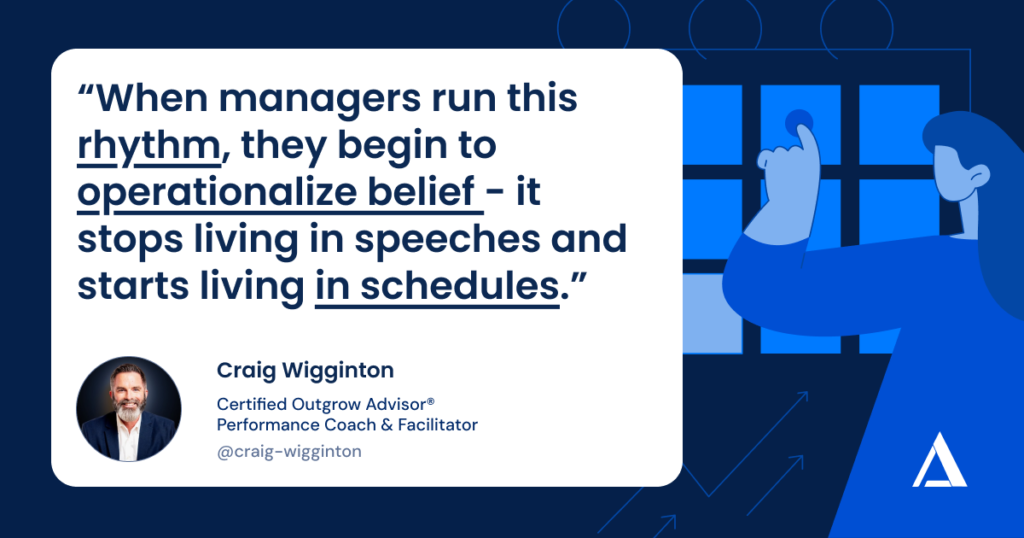
When managers run this rhythm, they begin to operationalize belief — it stops living in speeches and starts living in schedules. Culture no longer depends on charisma or inspiration. It depends on a calendar event that does not move.
Every huddle becomes a small act of renewal. You restate the belief, connect it to real actions, and reaffirm it through recognition. Over time, departments begin to move in sync. Communication flows. Optimism spreads.
Measure What Your Team Can Actually Control
Most companies obsess over the numbers that are hardest to change. Revenue. Margin. Closing ratios.
Those metrics matter, but they are lagging. By the time they are on the report, they are already history. When managers only see lagging numbers, accountability feels like getting graded on an exam you took a month ago.
Outgrow flips that. It pulls the spotlight to leading indicators, the behaviors that cause growth:
- Proactive calls to existing and potential customers
- Follow ups on open quotes and proposals
- “Did you know” conversations that surface new needs
- Requests for referrals and introductions
These actions are small and simple. They are also powerful.
Outgrow gives each manager a straightforward way to track them. Often it is nothing more complex than a shared tracker that answers three questions:
- What proactive actions did we complete this week?
- What new opportunities came from those actions?
- Who took initiative worth celebrating?
Now data does something different. It stops feeling like surveillance and starts feeling like progress. People are not being audited. They are being seen.
Managers gain live visibility into momentum. They can coach early, encourage effort, and adjust focus before performance dips. That is how visibility turns into velocity.
Turn Accountability Into Confidence, Not Fear
In most organizations, accountability sounds like pressure. A tense meeting. A spreadsheet review. A reminder of what did not get done.
When accountability shows up that way, people retreat. They make safer calls or fewer calls. They manage risk instead of creating opportunity. Confidence drains out of the culture.
Outgrow managers are taught to coach a different way.
They shift the conversation from compliance to confidence:
- Instead of focusing on what went wrong, they ask who took action and celebrate it.
- Instead of lecturing about missed chances, they highlight what went right and build on it.
- Instead of treating mistakes as failures, they frame them as learning and momentum.
The tone changes. Meetings feel lighter. People lean in instead of bracing.
Over time, managers develop simple habits that build confidence:
- Recognize effort, not just outcomes
- Coach through questions, not monologues
- Connect proactive actions to a larger purpose, not just a quota
Those habits compound. Teams feel stronger and braver. They stop waiting for leadership to inject energy and start carrying it themselves.
Accountability no longer feels like punishment. It feels like support. And that emotional shift shows up in sales calls, service interactions, and internal collaboration.
Your Move As CEO: Equip The Managers Who Run The Rhythm
Here is the punch line.
Outgrow runs through managers, but it lives because of you.
You cannot personally lead every huddle or track every behavior. You also cannot delegate the importance of this rhythm. When you talk about proactive communication, your managers talk about it. When you celebrate a proactive win, other teams copy it. When you go quiet, the organization quietly assumes it is safe to stop.
Your job is to equip and protect the rhythm:
- Give managers permission by making Outgrow a priority, not an add on
- Give them visibility by asking to see the rhythm in motion and dropping into a huddle
- Give them reinforcement by telling company stories that highlight proactive outreach and customer care
You do not need a new strategy. You need a system to operationalize belief — turning what you already have into a weekly behavior, led by the people who touch your customers every day.
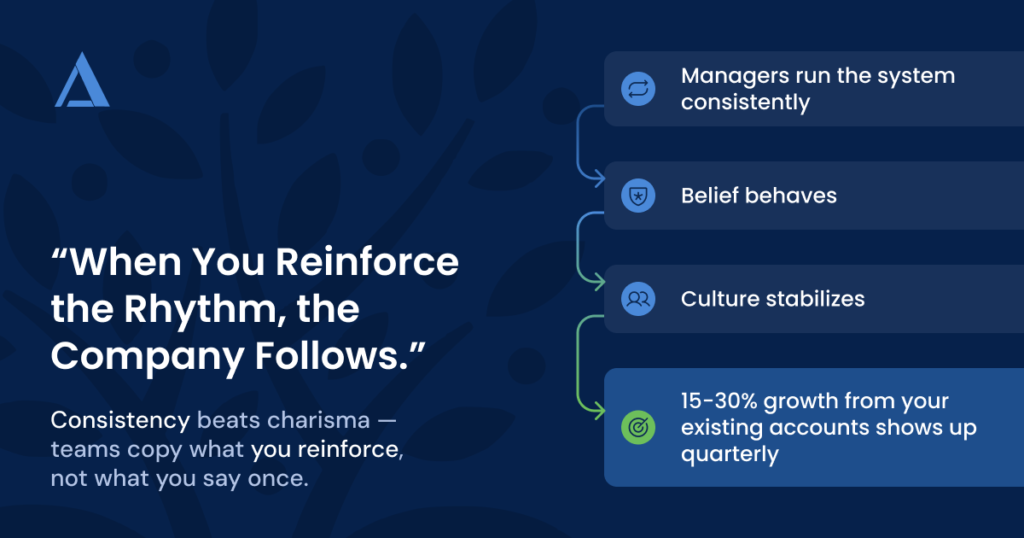
When managers run that system with consistency, belief behaves. When belief behaves, culture stabilizes. When culture stabilizes, that extra 15 to 30 percent of organic growth that used to come and go starts to show up quarter after quarter.That is how managers operationalize Outgrow. They take what you believe, give it a beat, measure what matters, and turn accountability into confidence. Your role is to put that rhythm in their hands and keep your belief behind it.
This article is part two of our CEO Series where we explore how managers turn proactive belief into a simple weekly rhythm that drives consistent, measurable growth.
- Part 1: The Missing Link in Growth: Why Managers Are The Key To Outgrow
- Part 2: Turning Belief into Behavior — How Managers Operationalize Outgrow
- Part 3: The Culture Multiplier: How Managers Keep Belief Alive When You’re Not in the Room
- Part 4: From Pressure to Predictability: How Mid-Level Managers Anchor Accountability